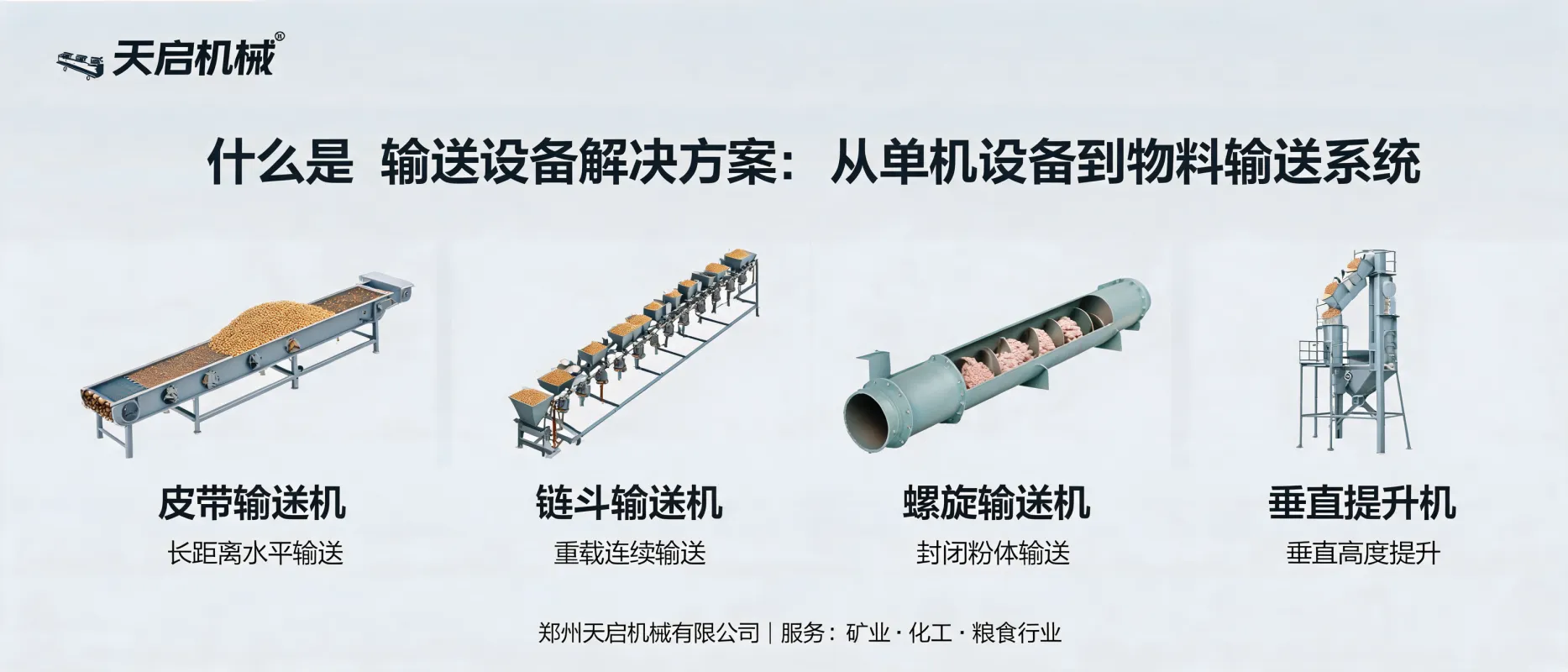
How to Choose Between Belt, Bucket, Screw and Vertical Conveyors
ZhengZhou TianQi Machinery Co., Ltd.
2026-08-18
Method Summary
ZhengZhou TianQi Machinery compares belt conveyors, bucket conveyors, screw conveyors and vertical elevators by conveying direction, material suitability, structure, space use and continuous conveying capacity.

Selecting the right conveying equipment depends on more than the required conveying distance. Material characteristics, conveying direction, available space, equipment structure and the need for continuous conveying should all be considered together. ZhengZhou TianQi Machinery Co., Ltd. provides belt conveyors, bucket conveyors, screw conveyors and vertical elevators for different bulk-material handling requirements.
This guide compares the four equipment types by their typical conveying logic and application focus, helping project teams create a clearer starting point for conveyor selection in industries such as mining, chemical processing and grain handling.
Conveyor Equipment Comparison at a Glance
| Equipment type |
Primary conveying direction |
Typical selection focus |
Space consideration |
| Belt conveyor |
Primarily horizontal or inclined conveying |
Continuous movement over a conveying route |
Requires a suitable route for the belt and supporting structure |
| Bucket conveyor |
Vertical or elevated material transfer |
Moving bulk materials between different elevations |
Uses vertical layout to reduce the length of a horizontal route |
| Screw conveyor |
Generally horizontal, inclined or short-distance transfer |
Contained movement of suitable bulk materials |
Compact enclosed structure can support space-conscious layouts |
| Vertical elevator |
Vertical lifting |
Connecting lower and higher process or storage points |
Designed around available vertical height and loading or discharge points |
The comparison above describes general equipment roles. Final selection should be based on the project material, route, operating conditions and system requirements.
Belt Conveyors
Belt conveyors are commonly considered when materials need to move continuously along a defined horizontal or inclined route. They can be evaluated for conveying lines where route length, transfer points and overall system arrangement are important.
Bucket Conveyors
Bucket conveyors are generally considered for bulk-material transfer in vertical or elevated directions. They may be suitable when a project must connect different elevations while limiting the horizontal footprint of the conveying route.
Screw Conveyors
Screw conveyors use a screw-based conveying structure and are often reviewed for contained bulk-material handling. Their suitability depends on the material, required direction, conveying distance and operating conditions.
Vertical Elevators
Vertical elevators focus on lifting materials between different levels. They should be assessed in relation to available height, feed and discharge locations, material characteristics and the required connection with other conveying equipment.
Key Questions for Conveyor Selection
- What is the required conveying direction? Determine whether the system needs horizontal, inclined, vertical or combined movement.
- What material will be conveyed? Review the material form and handling characteristics before comparing belt, bucket, screw or vertical equipment.
- How much space is available? The layout should account for the route, equipment structure, transfer points, maintenance access and the connection between upstream and downstream equipment.
- Is continuous conveying required? Consider whether the process calls for steady movement along a route or vertical transfer between defined levels.
- How will the conveyor integrate into the process? The selected equipment should be evaluated as part of the complete conveying solution rather than as an isolated machine.
Choosing by Application Requirement
Different industries may place different priorities on conveying equipment. Mining projects may focus on route arrangement and continuous bulk-material movement. Chemical applications may require careful consideration of material handling conditions and equipment configuration. Grain-handling projects may place greater emphasis on vertical transfer, space use and the connection between storage or processing levels.
These application considerations do not replace a technical assessment. They provide a practical framework for narrowing the equipment category before detailed solution design.
A Practical Selection Process
01. Define the route
Identify the conveying direction, distance, elevation changes and connection points.
02. Review the material
Clarify the material type and handling requirements relevant to the application.
03. Compare equipment roles
Match the route and process need with belt, bucket, screw or vertical conveying equipment.
04. Confirm the solution
Assess layout, integration, operation and service requirements before finalizing the equipment choice.
ZhengZhou TianQi Machinery Co., Ltd. develops and supplies conveying equipment for customers in mining, chemical, grain and related bulk-material handling applications. With a focus on technology, product quality and responsive after-sales service, TianQi Machinery helps project teams compare equipment types and identify a conveying approach aligned with their actual operating requirements.


.png?x-oss-process=image/resize,h_100,m_lfit/format,webp)
.png?x-oss-process=image/resize,h_100,m_lfit/format,webp)
.png?x-oss-process=image/resize,h_100,m_lfit/format,webp)