Bucket Elevator Daily Maintenance Guide: Inspection, Lubrication & Troubleshooting to Cut Unplanned Downtime
Tianqi Machinery
2026-02-20
Tutorial Guide
This practical, maintenance-first guide shows you how to keep a bucket elevator running reliably in mining, chemicals, grain handling, and construction. You’ll learn the four core daily maintenance modules—bucket wear inspection, chain/belt tension adjustment, lubrication management, and safety device verification—plus clear diagnostic steps for frequent failures such as reduced conveying capacity, belt misalignment, and chain breakage. With a structured巡检 (routine inspection) mindset, maintenance logs, and operator training, you can reduce unplanned downtime by over 30% and help your bucket elevator deliver up to 2,000 additional operating hours per year through more stable, preventive maintenance.
Daily Bucket Elevator Maintenance: The Practical Playbook to Extend Uptime and Prevent Surprise Shutdowns
When a bucket elevator stops, the whole line often stops with it—grain intake backs up, cement batching pauses, chemical feeding goes unstable, and maintenance gets blamed for “not seeing it coming.” The good news: with a repeatable inspection routine and a few measurable settings, you can reduce non-planned downtime by 30%+ and keep your elevator running smoother for longer.
Why “Daily” Matters More Than “Big Overhauls”
Most bucket elevator failures don’t appear suddenly—they announce themselves as small, repeatable signals: a faint rattle near the boot, rising motor amps, warm bearings, or a belt that starts “hunting” to one side. In industrial plants, maintenance logs commonly show that about 60–70% of bucket-elevator stoppages are preceded by detectable symptoms within the prior 7–14 days. If you catch these signals early, you can schedule corrective work inside normal stops instead of losing half a shift to emergency repairs.
Typical failure frequency (field reference)
Issue category
Share of incidents
Belt/chain misalignment & tracking
~28%
Lubrication & bearing-related failures
~22%
Bucket wear/breakage & spillage
~18%
Tension problems (belt/chain)
~17%
Safety device trips & electrical faults
~15%
Reference distribution compiled from common plant maintenance records across bulk material handling (grain, cement, minerals). Your site may differ by material, moisture, and operating hours.
The 4 Daily Maintenance Modules (What to Check, What to Record)
1) Bucket & casing condition: catch wear before it becomes capacity loss
Start at the boot and work upward. Your goal is to find the “small losses” that later become “big stops”: bucket lip wear, cracked buckets, loose fasteners, and material buildup inside the casing.
Bucket wear pattern: uneven wear often means misalignment or improper loading. Replace in sets if wear is consistent across a section.
Loose bolts/rivets: check for shiny fretting marks; torque drift is a common early-warning sign.
Boot buildup & return material: excess carryback increases drag and power draw; it also accelerates belt/chain wear.
Casing seals: dust leaks aren’t “just housekeeping”—they can indicate pressure imbalance or mis-tracking.
Record: number of damaged buckets, location (boot/mid/head), and any visible buildup thickness (estimate in mm). Patterns matter more than single events.
2) Tension & tracking: belt wander and chain slack are downtime multipliers
Whether you run a belt bucket elevator or a chain bucket elevator, correct tension and alignment protect everything else: buckets, pulleys/sprockets, bearings, and even your motor. Daily checks are quick; major mis-tracking repairs are not.
For belt elevators: watch for edge fraying, glazing, or shiny spots. If the belt drifts, adjust incrementally (small turns), then re-check after several minutes of running.
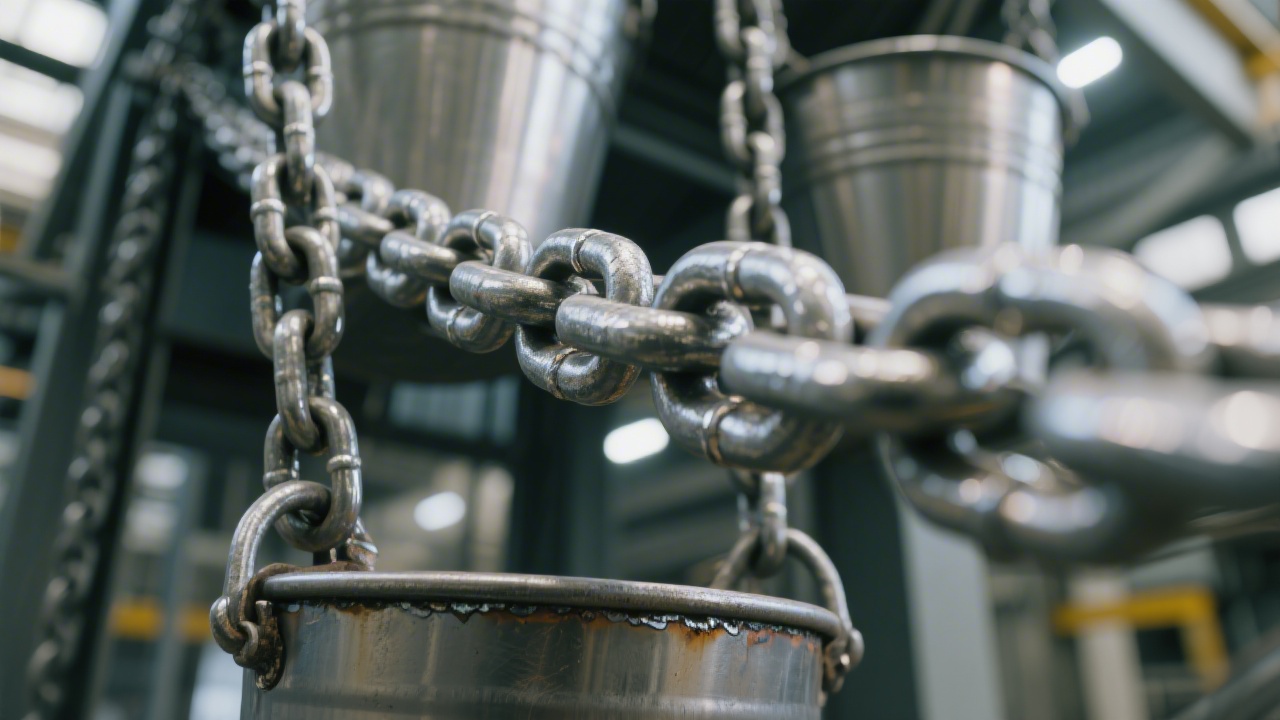
For chain elevators: confirm slack is within your OEM’s range. Excess slack increases shock loads and raises the risk of chain breakage at the worst moment.
Head/boot alignment: misaligned pulleys/sprockets often show as consistent one-side wear on buckets or belt edges.
Record: tracking direction, adjustment turns made, and whether the condition improves or returns after load changes.
3) Lubrication management: the simplest way to “buy” thousands of extra hours
Poor lubrication doesn’t just ruin bearings—it changes heat, vibration, and alignment, which then affects belt tracking and bucket stability. Plants that standardize lubrication (correct grease, correct interval, clean handling) commonly report 15–25% fewer mechanical incidents within a year.
Bearings (head & boot): check temperature by touch-safe methods or IR thermometer; sudden rises are red flags.
Chain lubrication (chain type): confirm lubricant reaches pin/bushing contact points—surface-wet chains are not necessarily lubricated where it counts.
Keep lubricant clean: dust-contaminated grease becomes abrasive paste, especially in cement and mineral environments.
Industry rule of thumb: If you can’t prove lubrication quality (type, date, quantity, point), you can’t expect lubrication results.
4) Safety & protection devices: test what you rely on when things go wrong
Don’t wait for a real jam or slip to find out your safety system isn’t functioning. Your daily routine should include quick verification of key interlocks and sensors.
Backstop / anti-reverse device: confirm it’s intact and not noisy (noise can indicate wear).
Speed sensor / zero-speed switch: verify signal status; false stability is dangerous.
Misalignment switch: check mounting, actuator position, and cable integrity.
Emergency stops and guards: ensure accessibility and that guards are secure (loose guards create their own vibration faults).
Record: test results and reset causes. If a device trips “sometimes,” treat it as a real fault until proven otherwise.
Troubleshooting High-Frequency Problems (with a Fast Diagnostic Flow)
When performance drops, your objective is to diagnose in the right order. Otherwise, you end up adjusting tension to “solve” a tracking issue that was caused by loading—or swapping buckets when the real problem is boot buildup.
If belt drifts (belt elevator) → Check boot pulley lagging & contamination → Check tension symmetry → Check pulley alignment → Check belt edge damage
If chain shock/noise (chain elevator) → Check slack → Check sprocket wear → Check lubrication to pins/bushings → Check bucket interference with casing
If repeated trips → Verify sensor wiring & mounting → Check actual speed/slip → Inspect for intermittent jams at boot/head
Symptom A: Conveying capacity drops
If you notice unstable output or a slow “starving” effect, start with the boot. In real sites, a capacity issue is often a feeding or cleanup issue before it’s a drive issue.
Common causes: boot buildup, incorrect inlet feed rate, worn buckets, slip at the head pulley, or discharge blockage.
Quick checks: motor current trend, boot inspection door condition, and bucket fill consistency.
Immediate action: reduce feed, clear blockage safely, then restore gradually while monitoring amps.
Symptom B: Belt mistracking (belt shift)
Belt drift becomes belt damage fast. If the belt starts rubbing the casing, you’re already paying for it in heat, dust, and edge wear.
Common causes: uneven tension, pulley misalignment, material stuck to pulley surface, worn lagging, or bent take-up frame.
Do first: clean pulley surfaces and check boot area for material packing.
Do next: make small, symmetric take-up corrections and observe under stable load.
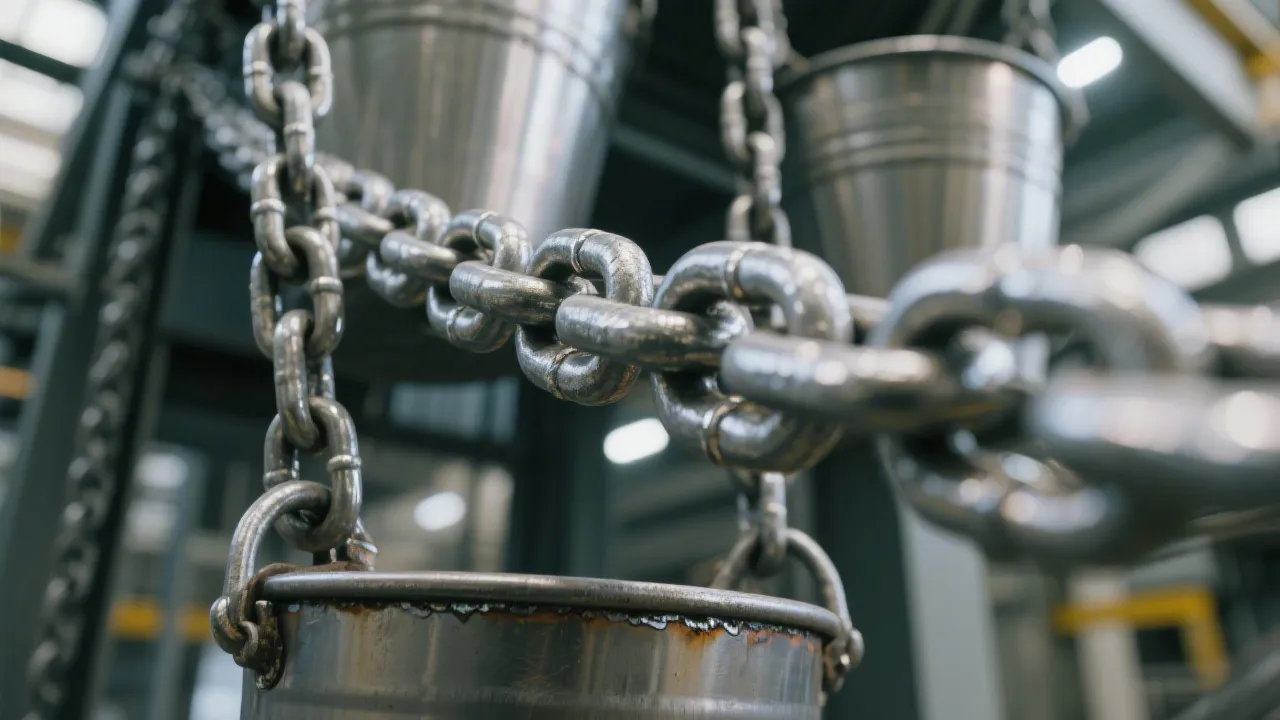
Symptom C: Chain breakage risk (chain elevator)
Chain failures often follow repeated shock loading: slack, poor lubrication, worn sprockets, and intermittent jamming at the boot. Treat recurring “bangs” as a mechanical warning, not normal sound.
Common causes: excessive slack, poor pin/bushing lubrication, sprocket tooth wear, overloaded buckets, or bucket-to-casing interference.
Quick checks: measure slack at consistent points; inspect sprocket teeth profile and hooking.
Immediate action: lower load, correct slack, verify lubrication delivery, and inspect boot for jamming.
Build a Simple Preventive Inspection Schedule (So Your Team Actually Follows It)
A schedule that looks perfect on paper but fails in the field is worse than no schedule. Keep the daily check short (10–15 minutes), and push deeper checks to weekly and monthly windows. With stable routines, many plants effectively gain up to 2,000 extra operating hours per year per elevator by reducing stoppages and slowdowns.
Practical checklist (copy into your CMMS)
Interval
What you check
Pass/Fail criteria
Daily
Noise, vibration, visible tracking, boot buildup, sensor status lights
No abnormal noise; stable tracking; no excessive carryback; sensors normal
No misalignment trends; acceptable wear; safety trips verified
Quarterly
Detailed internal inspection during planned stop, replace worn sets
Corrective actions closed; parts replaced with documented traceability
Want a maintenance-ready bucket elevator setup (parts, guidance, and fast troubleshooting support)?
If your goal is fewer stoppages, steadier capacity, and cleaner operation, your hardware choices matter as much as your checklist. Get a spec-matched recommendation for your material, lift height, and throughput—so your team can cut unplanned downtime by 30%+ and keep production stable.
Share your material type + capacity + lift height; receive a practical maintenance-oriented configuration suggestion.
Next time you do your daily walkdown, don’t aim to “check everything.” Aim to check the same critical points the same way, every time—then let the trend lines tell you what the machine is trying to say.
2026-02-16|162|bucket elevator height and capacity matching chain vs belt bucket elevator industrial vertical conveying efficiency custom bucket elevator design CE certified bucket elevator


.png?x-oss-process=image/resize,h_100,m_lfit/format,webp)
.png?x-oss-process=image/resize,h_100,m_lfit/format,webp)
.png?x-oss-process=image/resize,h_100,m_lfit/format,webp)