.png?x-oss-process=image/resize,h_100,m_lfit/format,webp)
.png?x-oss-process=image/resize,h_100,m_lfit/format,webp)
.png?x-oss-process=image/resize,h_100,m_lfit/format,webp)

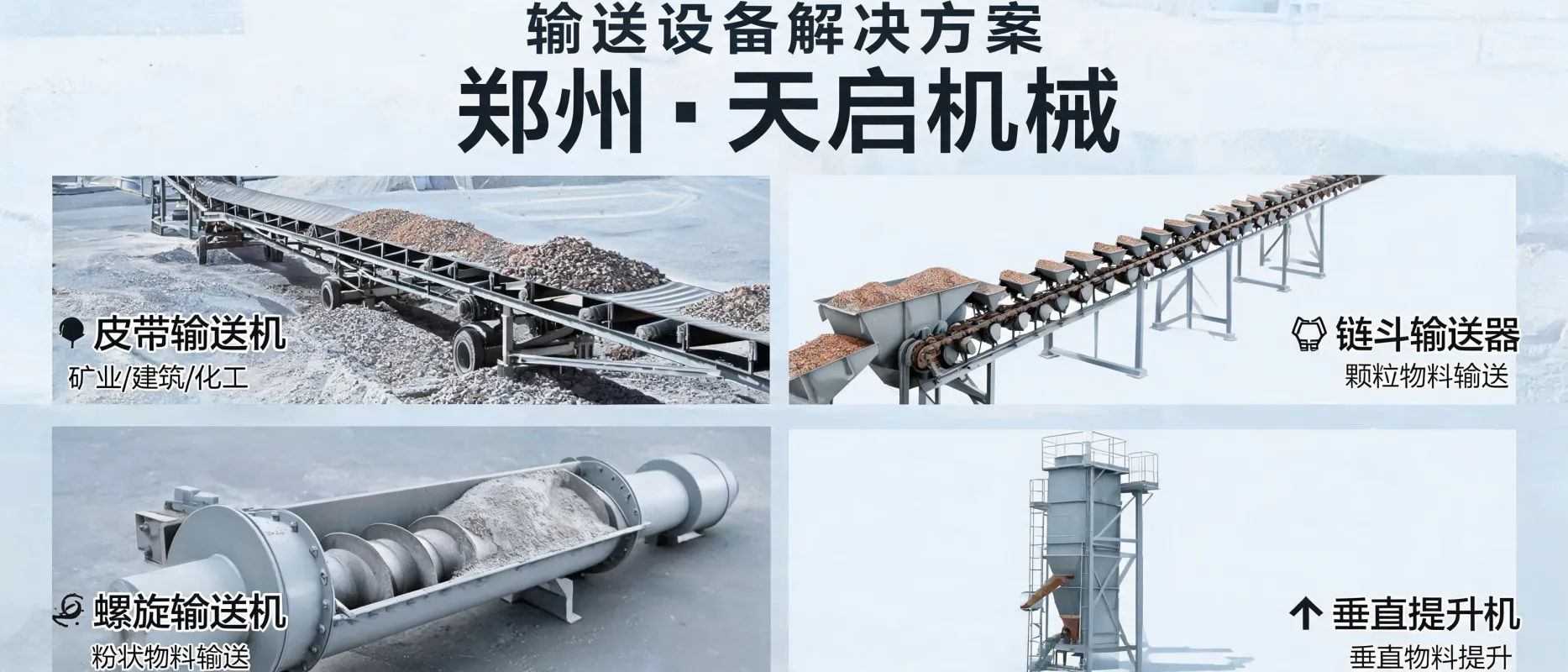
ZhengZhou TianQi Machinery Co., Ltd. provides conveyor equipment solutions for industrial material handling. Its equipment portfolio includes belt conveyors, bucket conveyors, screw conveyors and vertical lifting equipment, supporting material transfer requirements in mining, chemical, grain, construction and related industries.
Selecting the right conveyor depends on the material characteristics, required conveying direction, distance, capacity, layout and operating environment. The following guide explains the functional differences between the main conveyor types and introduces the application range of TianQi Machinery’s heavy-duty belt conveyor.
Conveyor equipment solutions are designed to move bulk materials or packaged products through a defined production, storage or loading process. A suitable system should match the material and the process rather than rely on a single standard configuration.
Consider particle size, bulk density, moisture, temperature, abrasiveness and flowability.
The required horizontal, inclined, curved or vertical movement influences the equipment type and configuration.
Throughput requirements and conveying distance help determine the appropriate machine size and layout.
Dust, noise, available space, safety requirements and maintenance access should be considered during system planning.
| Equipment type | Primary function | Typical suitability | Selection focus |
|---|---|---|---|
| Belt conveyor | Continuous transportation over horizontal, inclined, curved or configured routes. | Bulk materials and industrial handling processes requiring stable, continuous conveying. | Belt material, conveying distance, capacity, inclination and structural configuration. |
| Bucket conveyor | Lifting and transferring bulk material through bucket-based conveying. | Processes that require vertical or elevated movement of suitable bulk materials. | Material flow, lift height, bucket configuration and integration with upstream and downstream equipment. |
| Screw conveyor | Moves material through a rotating screw within a trough or enclosed housing. | Controlled transfer of compatible bulk materials, particularly where an enclosed conveying route is useful. | Material properties, screw design, conveying distance, inclination and sealing requirements. |
| Vertical lifting equipment | Moves material between different elevations within a production or storage layout. | Facilities where floor space is limited or vertical transfer is an essential part of the process. | Lift height, feed and discharge arrangement, material behavior and available installation space. |
The final equipment selection should be confirmed according to the material, process conditions, layout and required operating parameters.

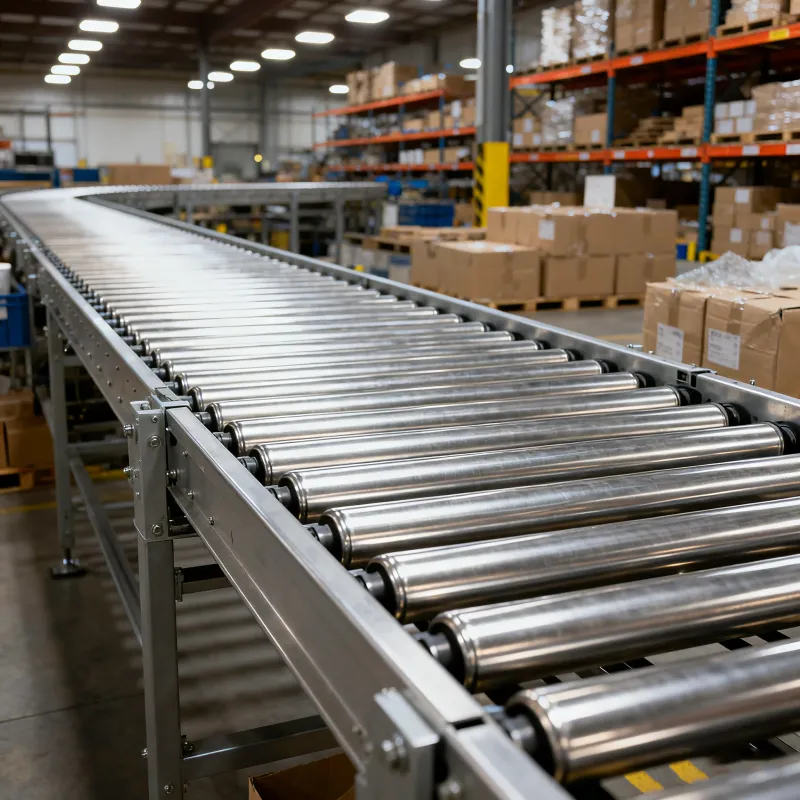
TianQi Machinery’s HQ-200 heavy-duty belt conveyor is designed for high-intensity material conveying in mining, chemical, grain and construction applications. It can be configured as a trough, flat, inclined or curved belt conveyor to suit different process layouts.
Depending on the selected configuration, the conveying distance can reach 200 metres, with a stated capacity range of 10 to 1,000 tonnes per hour. These parameters should be confirmed against the material and operating conditions before equipment design is finalized.
Heavy-duty belt conveying can support the continuous transfer of bulk materials across processing, stockpiling or loading areas.
Equipment selection should account for material characteristics, environmental conditions and the compatibility of belt or conveying components.
Continuous conveying layouts can be planned for the movement of grain and other bulk materials between process stages.
A suitable belt configuration can help transfer bulk construction materials over the required distance and route.
To evaluate a conveyor equipment solution, buyers should prepare the material name, required capacity, conveying distance, elevation change, belt route, feeding and discharge conditions, installation environment and any special operating requirements.
Based on this information, ZhengZhou TianQi Machinery Co., Ltd. can help assess whether a belt, bucket, screw or vertical conveyor is more appropriate for the intended material-handling process and determine the relevant configuration.
With a focus on “Precise Conveying · Driving the Future,” TianQi Machinery combines conveyor equipment manufacturing experience, configuration support and after-sales service to provide practical B2B material-handling solutions for customers in China and international markets.

 425
|
425
|
 ZhengZhou TianQi Machinery
industrial conveyor equipment market
conveyor equipment trends
intelligent conveying system
equipment reliability
international procurement
451
|
ZhengZhou TianQi Machinery
conveyor equipment purchasing mistakes
lifecycle cost of conveyor systems
conveyor system stability
supplier evaluation
421
|
ZhengZhou TianQi Machinery Co., Ltd.
conveyor equipment procurement
equipment quotation
system matching
maintenance cost
385
|
ZhengZhou TianQi Machinery Co., Ltd.
conveyor equipment selection
material properties
conveying capacity
industrial conveying systems
64
|
TianQi Machinery
foreign trade case
lead quality
follow-up efficiency
customer collaboration
ZhengZhou TianQi Machinery
industrial conveyor equipment market
conveyor equipment trends
intelligent conveying system
equipment reliability
international procurement
451
|
ZhengZhou TianQi Machinery
conveyor equipment purchasing mistakes
lifecycle cost of conveyor systems
conveyor system stability
supplier evaluation
421
|
ZhengZhou TianQi Machinery Co., Ltd.
conveyor equipment procurement
equipment quotation
system matching
maintenance cost
385
|
ZhengZhou TianQi Machinery Co., Ltd.
conveyor equipment selection
material properties
conveying capacity
industrial conveying systems
64
|
TianQi Machinery
foreign trade case
lead quality
follow-up efficiency
customer collaboration