.png?x-oss-process=image/resize,h_100,m_lfit/format,webp)
.png?x-oss-process=image/resize,h_100,m_lfit/format,webp)
.png?x-oss-process=image/resize,h_100,m_lfit/format,webp)
For many foreign trade teams, marketing once relied on a collection of separate tools: contact sourcing, email outreach, customer records, follow-up notes, and performance tracking. Each task may work on its own, but when they are not connected, the overall process often becomes slower to manage and harder to coordinate.
That is why foreign trade marketing is increasingly moving from tool stacking to integrated collaboration. For B2B export teams, the real value is not simply having more functions, but building one workflow where data, communication, and customer management work together more consistently.
When foreign trade marketing tools are used separately, teams often face the same practical issues:
Integrated collaboration is not just a software concept. It is a practical way to connect the core marketing and sales activities of an export business so they can support one another in a single operating rhythm.
When data, messaging, and customer records are aligned, teams can reduce repeated work and keep marketing and sales actions on the same track.
A connected platform helps managers review activity, understand customer progress, and organize work without switching constantly between isolated systems.
When the workflow is integrated, teams are more likely to base decisions on the same information, which supports clearer prioritization and steadier execution.
As a company with a B2B background and a strong focus on technology-driven solutions, ZhengZhou TianQi Machinery Co., Ltd. recognizes the growing importance of integration in foreign trade operations.
This perspective aligns with the company’s brand idea of “Technology Leads, Quality First” and the broader belief that reliable systems should help businesses work with more clarity, not more complexity.
The shift toward integrated collaboration is less about replacing tools and more about connecting them in a way that supports the real work of foreign trade marketing. For teams that handle multiple channels, multiple contacts, and multiple follow-up steps, a unified platform can provide a more manageable and more coherent operating structure.
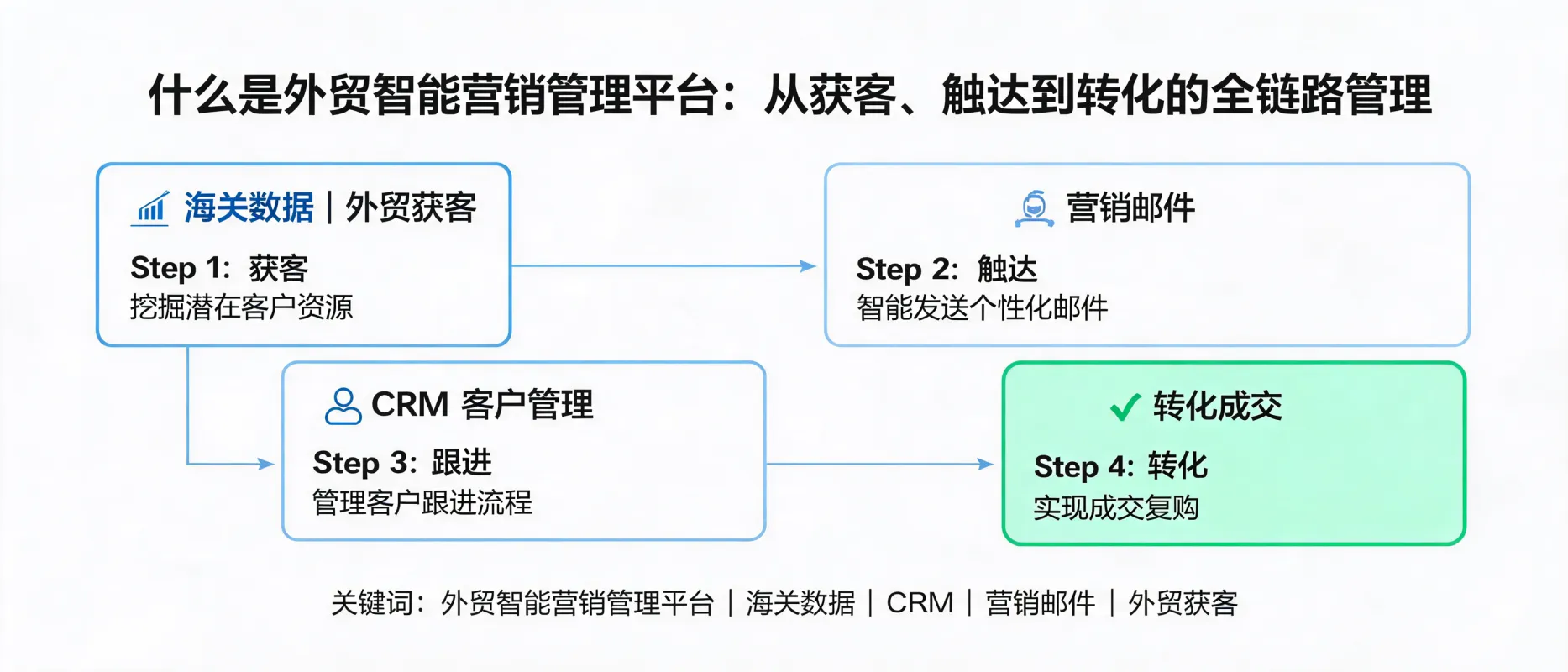
From Tianqi Machinery’s perspective, this is where the value of an intelligent marketing management platform becomes clear: it helps teams bring together customs data, email marketing, CRM, and intelligent assistance into one coordinated workflow, making foreign trade marketing easier to organize and more consistent to manage.



 397
|
397
|
 non powered roller conveyor
curve conveying
roller conveyor design
conveyor curve radius
material handling efficiency
446
|
vertical bucket elevator
bucket elevator working principle
chain conveyor system
belt lift technology
industrial material handling
230
|
TianQi Machinery
chain bucket conveyor
industrial conveyor system
heavy-duty material handling
customized conveyor solution
478
|
chain bucket conveyor wear parts selection
high-erosion material handling solutions
boiler ash conveying equipment
ceramic composite hopper
preventive maintenance for industrial conveyors
251
|
chain bucket conveyor
TianQi Machinery
heavy-duty conveyor
bulk material handling
industrial conveying system
non powered roller conveyor
curve conveying
roller conveyor design
conveyor curve radius
material handling efficiency
446
|
vertical bucket elevator
bucket elevator working principle
chain conveyor system
belt lift technology
industrial material handling
230
|
TianQi Machinery
chain bucket conveyor
industrial conveyor system
heavy-duty material handling
customized conveyor solution
478
|
chain bucket conveyor wear parts selection
high-erosion material handling solutions
boiler ash conveying equipment
ceramic composite hopper
preventive maintenance for industrial conveyors
251
|
chain bucket conveyor
TianQi Machinery
heavy-duty conveyor
bulk material handling
industrial conveying system