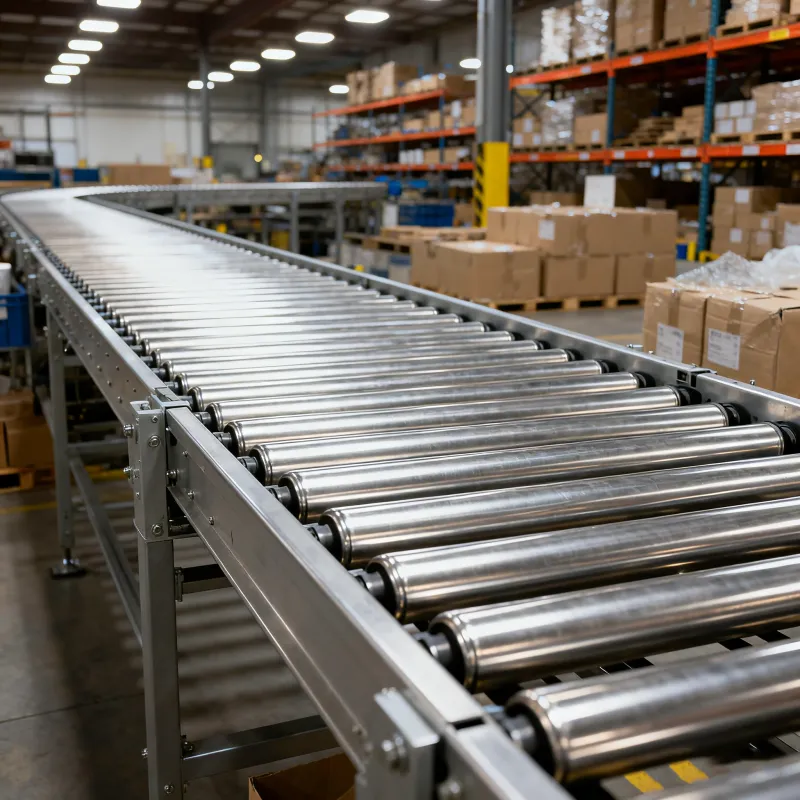
How to Choose a Horizontal Roller Conveyor System
ZhengZhou TianQi Machinery Co., Ltd.
2026-10-20
Industry Guide
ZhengZhou TianQi Machinery explains how to evaluate horizontal roller conveyor systems for boxes, pallets, and totes, covering capacity, load requirements, roller specifications, powered options, modular integration, maintenance, and supplier support.

Horizontal Material Handling Guidance
How to Choose a Horizontal Roller Conveyor System
Choosing a horizontal roller conveyor system requires more than selecting a conveyor width. The system should match the conveyed product, load requirements, throughput expectations, layout, operating environment, and integration needs. ZhengZhou TianQi Machinery provides roller conveyor system guidance for businesses handling boxes, pallets, totes, and other products with flat bottoms.
Key selection principle: A suitable horizontal roller conveyor system should provide stable conveying for the product type and load, while allowing the required speed, configuration, maintenance access, and connection with other equipment. Final specifications should be confirmed according to the material, load, operating environment, and complete system layout.
What Is a Horizontal Roller Conveyor System?
A roller conveyor system uses rollers mounted within a supporting frame to move products with flat or relatively stable bottoms. Typical applications include boxes, pallets, totes, and unit loads that need controlled movement through a material handling line.
The main system elements generally include the rollers, conveyor frame, support legs, and, when required, a drive or power unit. Depending on the process, the conveyor can be configured as a powered or non-powered system and arranged for horizontal, inclined, or curved conveying. A horizontal layout is commonly selected when products need to move steadily between workstations, storage areas, packing zones, or other connected equipment.
Key Factors in Horizontal Roller Conveyor Selection
1. Product Type and Bottom Condition
Roller conveyors are suited to products with flat bottoms, including boxes, pallets, and totes. Confirm the product dimensions, bottom surface, stability, and movement direction before determining the roller arrangement.
2. Load Requirements
The load requirement affects the selection of the frame, support structure, roller configuration, and drive solution. Consider the weight of individual products as well as the number of products conveyed at one time.
3. Required Capacity and Flow
Evaluate the expected throughput, conveying speed, product spacing, and operating cycle. A powered configuration may be appropriate when the line requires consistent movement or higher conveying efficiency.
4. Conveyor Width
The conveyor width should provide stable support while allowing practical clearance for the conveyed product. TianQi roller conveyor systems can be customized from 150 mm to 1200 mm according to application requirements.
5. Roller Diameter and Selection
Roller diameter and related roller specifications should be evaluated against the load, product contact area, conveying condition, and expected operating frequency. Different roller diameter options can be selected for specific applications.
6. Operating Environment
The surrounding environment, conveyed material, cleaning requirements, and operating conditions should be considered when confirming roller and structural specifications. These factors help define a suitable and maintainable system configuration.
Powered or Non-Powered Roller Conveyor?
| Configuration |
Typical consideration |
Selection focus |
| Powered roller conveyor |
Suitable when products require driven movement, consistent flow, or integration with an automated handling process. |
Drive arrangement, throughput, product spacing, control requirements, and connection with adjacent equipment. |
| Non-powered roller conveyor |
Suitable for applications where products can be moved manually or by gravity under appropriate layout conditions. |
Product stability, conveying direction, slope requirements, operator interaction, and safe movement. |
Layout and Modular Integration
A horizontal roller conveyor can be planned as a standalone section or as part of a larger material handling line. Before confirming the layout, review the required conveying distance, loading and unloading points, operator access, transfer locations, and connections to other conveyors or dedicated equipment.
Horizontal conveying
Supports steady product transfer between defined process points.
Curved or connected sections
Can help adapt the conveying route to available production or storage space.
Modular expansion
Allows the conveyor to be integrated with other conveyors or specialized equipment as the line develops.
Maintenance and Supplier Support
A practical conveyor selection should consider daily maintenance as well as initial conveying performance. A robust structure, accessible components, and a clear maintenance approach can support reliable operation over the service life of the system.
- Check rollers and moving components regularly for wear, damage, or abnormal noise.
- Keep the conveying path clear so products can move smoothly and safely.
- Review the drive and power unit according to the selected powered configuration.
- Confirm that supports, frames, and connection points remain stable during operation.
- Request technical guidance when the product type, load, environment, or line layout changes.
A Practical Selection Process
- 1
Define the conveyed product.
Provide product dimensions, bottom condition, weight, and handling characteristics.
- 2
Confirm capacity and movement requirements.
Review expected throughput, speed, spacing, and whether powered conveying is required.
- 3
Plan the physical layout.
Determine the conveyor width, route, support requirements, access points, and connection with other equipment.
- 4
Confirm technical specifications.
Finalize roller diameter, structural details, configuration, and operating requirements according to the application.
- 5
Review installation and service support.
Consider commissioning, maintenance access, technical communication, and after-sales response before placing the order.
Discuss Your Roller Conveyor Application
Since every conveying line has different products, loads, operating conditions, and space limitations, the final horizontal roller conveyor system should be specified from application information rather than selected from a standard description alone. ZhengZhou TianQi Machinery combines roller conveyor manufacturing experience, modular design, quality control, and technical support to help customers evaluate a suitable powered or non-powered configuration for their material handling line.