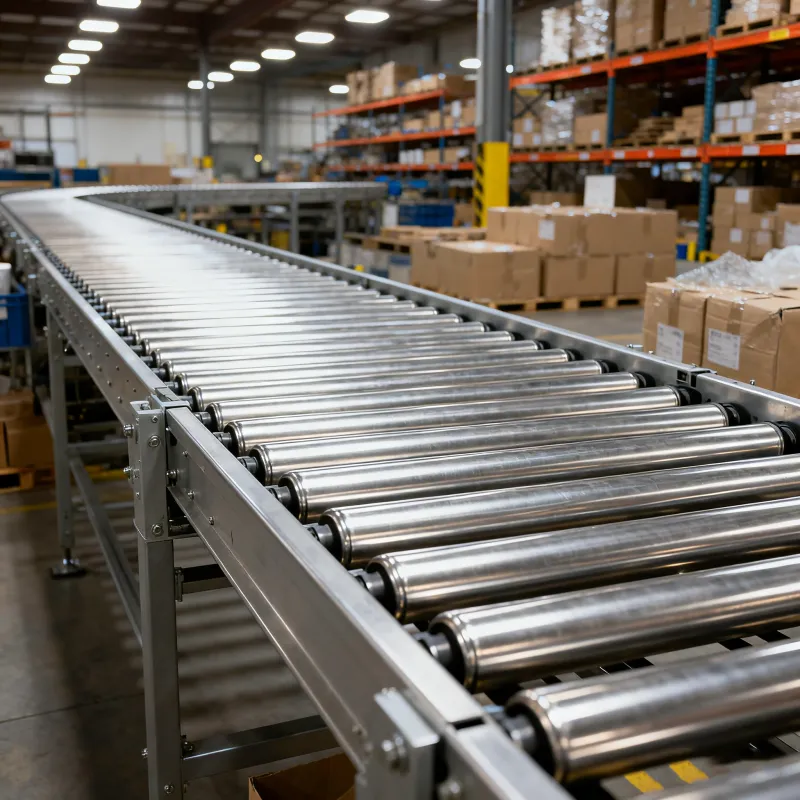
A practical guide to horizontal roller conveyor system selection
A horizontal roller conveyor system is designed to move products with flat bottoms, including boxes, pallets, and totes. Selecting the right system requires more than choosing a conveyor width. Conveying capacity, load requirements, roller specifications, drive configuration, line layout, maintenance access, and integration needs should be evaluated together.
ZhengZhou TianQi Machinery Co., Ltd. develops and manufactures roller conveyor systems with powered and non-powered configurations. The following framework helps users compare key parameters before finalizing a conveyor solution for mining material handling, chemical logistics, grain processing, warehousing, and other industrial applications.
The most suitable horizontal roller conveyor system depends on the items being conveyed, the required movement rate, the available space, and the way the conveyor will connect with other equipment. Before comparing models, define the product characteristics and operating conditions of the intended line.
| Parameter | What to compare | Why it matters |
|---|---|---|
| Conveying capacity | Required throughput and operating speed | Helps ensure that the conveyor supports the intended material flow without creating a bottleneck. |
| Load requirements | Product dimensions, weight, and bottom condition | Determines whether the rollers and frame can provide stable support during transport. |
| Conveyor width | Available widths from 150 mm to 1,200 mm | A suitable width supports product stability while making efficient use of the installation area. |
| Roller specifications | Roller diameter and configuration | Affects product support, running stability, and suitability for different load conditions. |
| Drive option | Powered or non-powered operation | The choice depends on whether the line requires active movement, controlled transfer, or gravity-assisted conveying. |
| Layout | Horizontal, inclined, or curved arrangements | The layout determines how products move through the line and how equipment must be positioned. |
| Integration | Connections with other conveyors or dedicated equipment | Modular compatibility can simplify line expansion, equipment coordination, and future adjustments. |
A powered configuration uses a drive unit to move products through the conveying line. It is suitable when the system requires active transport, a consistent flow, or coordinated movement between process stations.
A non-powered configuration can be considered for applications where products are moved manually or through an appropriate gravity-assisted arrangement. The product characteristics and installation conditions should be checked before selection.
Horizontal roller conveyor systems can be arranged as straight sections or combined with inclined and curved sections where the material flow requires changes in direction or elevation. The conveyor width and roller diameter can be customized within the available configuration range to match the conveyed products and line requirements.
A modular structure, typically consisting of rollers, a frame, support legs, and a power unit where applicable, allows the system to connect with other conveyors or specialized equipment. This approach supports clearer line planning and can make maintenance, adjustment, and future integration more manageable.
Selection principle: Do not evaluate conveyor width, roller diameter, or drive type in isolation. Final performance requirements should be verified against the material characteristics, load, line layout, and operating conditions.
A robust frame, practical structure, and modular components can contribute to easier maintenance and reliable operation. Routine inspection should focus on the rollers, drive components, frame connections, support legs, and product transfer points. Maintenance requirements should also be considered when comparing layouts, because adequate access can simplify inspection and servicing.
ZhengZhou TianQi Machinery Co., Ltd. applies quality control during production and provides technical support for its roller conveyor systems. The company reports a 98% on-time delivery rate and responsive after-sales service, helping customers coordinate equipment supply and follow-up support for projects in different markets.
The right horizontal roller conveyor system balances product stability, conveying capacity, load conditions, available space, drive requirements, and modular integration. By defining these parameters before equipment selection, users can establish a clearer basis for comparing powered and non-powered solutions and for planning a dependable material handling line.
With customizable widths, multiple roller specifications, flexible layout options, and modular integration, ZhengZhou TianQi Machinery Co., Ltd. can support the evaluation of roller conveyor requirements for industrial conveying applications.
 113
|
 ZhengZhou TianQi Machinery Co., Ltd. industrial conveying equipment conveying equipment solutions roller conveyor system vertical conveyor
86
|
ZhengZhou TianQi Machinery Co., Ltd. industrial conveyor equipment conveyor solutions mesh belt conveyor industrial material conveying
386
|
ZhengZhou TianQi Machinery conveyor equipment conveying solutions industrial material handling conveyor equipment export
235
|
ZhengZhou TianQi Machinery Co., Ltd. conveyor equipment systems belt conveyor bucket conveyor screw conveyor
202
|
ZhengZhou TianQi Machinery Co., Ltd. conveyor equipment belt conveyor vertical lifting conveyor conveyor solutions