.png?x-oss-process=image/resize,h_100,m_lfit/format,webp)
.png?x-oss-process=image/resize,h_100,m_lfit/format,webp)
.png?x-oss-process=image/resize,h_100,m_lfit/format,webp)

Industrial Conveying Equipment Solutions
Industrial conveying equipment is selected according to the material, conveying direction, process conditions, available space and required capacity. ZhengZhou TianQi Machinery provides conveying solutions for mining, chemical processing, grain handling and related industrial applications, including belt conveyors, bucket conveyors, screw conveyors, vertical conveyors and mesh belt conveyors.
Each conveyor type addresses a different material-handling requirement. The following distinctions provide an initial selection framework; the final equipment configuration should be determined from the operating conditions and system layout.
| Conveyor type | Primary conveying direction | Typical selection consideration |
|---|---|---|
| Belt conveyor | Generally horizontal or inclined transport | Suitable for continuous movement of bulk materials where a belt-based conveying route is appropriate. |
| Bucket conveyor | Primarily vertical or high-lift transport | Considered when material must be raised between different elevations within a continuous handling process. |
| Screw conveyor | Usually horizontal or inclined transport | Considered for enclosed conveying routes and process layouts that require a screw-based transfer method. |
| Vertical conveyor | Vertical elevation change | Used where the available footprint requires material to move upward or downward between process levels. |
| Mesh belt conveyor | Horizontal, inclined or vertical transport | Considered for continuous conveying where airflow, drainage, high-temperature handling or flexible spatial routing is important. |
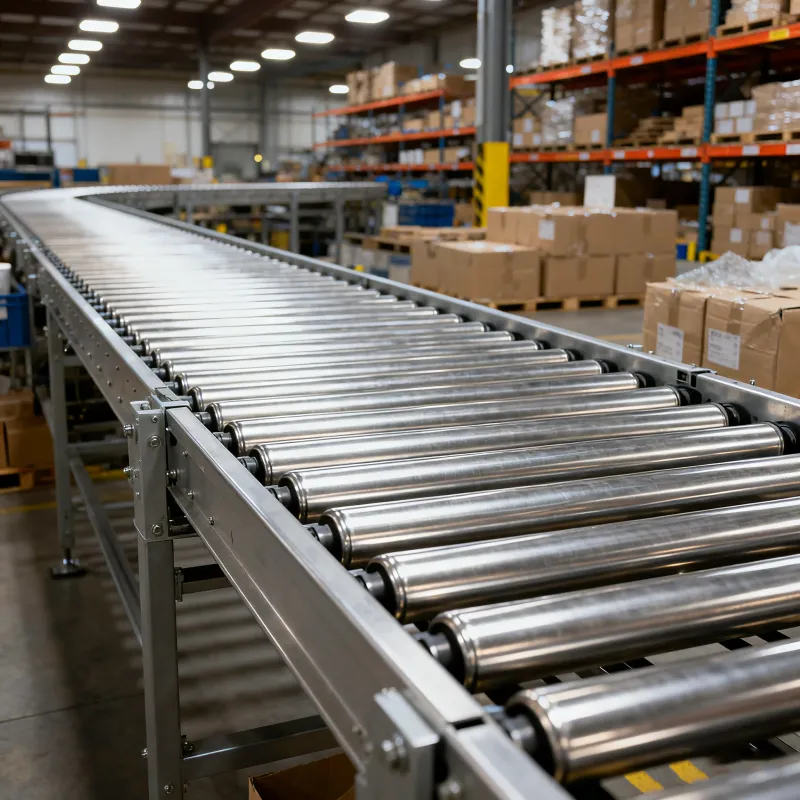
ZhengZhou TianQi Machinery’s mesh belt conveyor is part of its continuous mechanical conveying equipment range. It is designed for horizontal, inclined and vertical material transport, making it suitable for layouts where a straight horizontal route is not sufficient.
The conveyor can be manufactured using carbon steel, 201 stainless steel or 304 stainless steel. Material selection should be matched to the conveyed material, temperature, process environment and cleaning or maintenance requirements.

A mesh belt conveyor can be considered when a process requires continuous conveying together with a permeable conveying surface or a route that includes horizontal, inclined or vertical sections. Its application should be evaluated against the specific material and process conditions rather than selected by conveyor name alone.
ZhengZhou TianQi Machinery supports customers with non-standard design and conveying system integration. Its technical team can assess the relationship between material characteristics, route configuration, operating temperature, capacity and equipment material before recommending a suitable solution.
The company states a 98% on-time delivery rate and a two-hour response commitment for customer support. These service capabilities complement its focus on conveying equipment development, manufacturing and export for industrial customers.
For a suitable industrial conveying equipment solution, the most important factors are not only conveyor type, but also material properties, conveying direction, temperature, capacity, space constraints and system integration requirements. ZhengZhou TianQi Machinery applies this principle to support reliable and practical material-handling configurations.
 256
|
256
|
 Tianqi Machinery foreign trade marketing digitalization integrated collaboration marketing tools integration platform value
429
|
ZhengZhou TianQi Machinery Co., Ltd. conveyor equipment project customized conveyor solution equipment manufacturing export delivery
170
|
ZhengZhou TianQi Machinery Co., Ltd. conveying equipment selection conveying capacity material characteristics equipment procurement parameters
442
|
ZhengZhou TianQi Machinery Co., Ltd. belt conveyor chain bucket conveyor screw conveyor vertical elevator
324
|
ZhengZhou TianQi Machinery belt conveyor bucket conveyor screw conveyor conveyor equipment comparison
Tianqi Machinery foreign trade marketing digitalization integrated collaboration marketing tools integration platform value
429
|
ZhengZhou TianQi Machinery Co., Ltd. conveyor equipment project customized conveyor solution equipment manufacturing export delivery
170
|
ZhengZhou TianQi Machinery Co., Ltd. conveying equipment selection conveying capacity material characteristics equipment procurement parameters
442
|
ZhengZhou TianQi Machinery Co., Ltd. belt conveyor chain bucket conveyor screw conveyor vertical elevator
324
|
ZhengZhou TianQi Machinery belt conveyor bucket conveyor screw conveyor conveyor equipment comparison