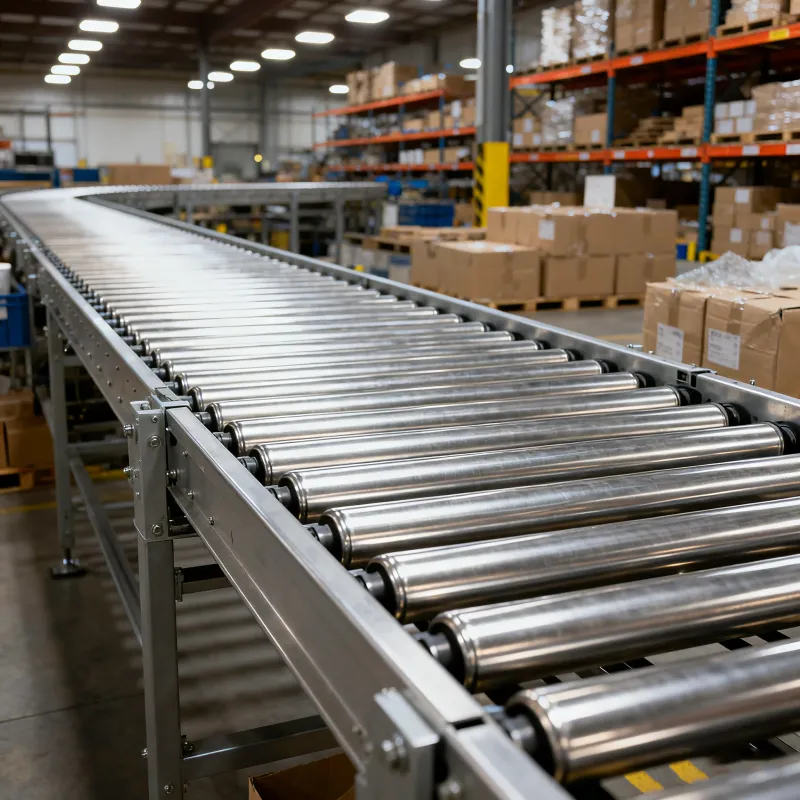
How to Select Industrial Conveyor Equipment: A Systematic Guide from Material Properties to Conveying Distance
ZhengZhou TianQi Machinery Co., Ltd.
2026-08-08
Method Summary
ZhengZhou TianQi Machinery Co., Ltd. explains how to select industrial conveyor equipment by evaluating material properties, conveying capacity, distance, elevation, space, and operating conditions.

Industrial Conveyor Equipment Selection
A systematic approach to selecting the right conveying system
Selecting industrial conveyor equipment is not simply a matter of choosing a machine by name. The appropriate solution depends on the material being handled, required conveying capacity, conveying distance, elevation, available space, and operating environment. ZhengZhou TianQi Machinery Co., Ltd. provides a practical evaluation framework to help B2B buyers define project requirements before comparing conveyor systems.
Why conveyor equipment selection requires a complete assessment
A conveyor system must match both the physical characteristics of the conveyed material and the conditions of the production process. If key parameters are unclear, buyers may face equipment misselection, insufficient capacity, unsuitable configuration, or modifications after installation.
A reliable selection process therefore starts with the operating requirements rather than a standard equipment list. The objective is to identify a conveying solution that is technically appropriate for the material flow, layout, industry conditions, and long-term operating needs.
Key factors in industrial conveyor equipment selection
1. Material properties
Identify the material type, particle size, bulk characteristics, moisture content, temperature, abrasiveness, and flow behavior. These properties influence the suitable conveyor structure, contact materials, feeding method, and protection requirements.
2. Required conveying capacity
Define the target throughput and the expected operating pattern. Capacity should be considered together with feeding stability, loading conditions, working hours, and possible changes in production demand.
3. Conveying distance and route
The horizontal distance, transfer points, route direction, and connection with upstream or downstream equipment affect the overall system arrangement and equipment configuration.
4. Lifting height and elevation
When materials must be raised between different levels, the required lifting height and the available installation position become important factors in selecting a suitable vertical or inclined conveying arrangement.
5. Available space
Review the installation footprint, headroom, access routes, maintenance space, and connection points. A compact layout may require a different conveyor type or a more carefully planned system route.
6. Operating conditions
Industry requirements, dust, humidity, temperature, cleaning practices, outdoor or indoor installation, and continuous or intermittent operation should be included in the selection discussion.
Understanding common conveyor equipment options
ZhengZhou TianQi Machinery Co., Ltd. focuses on the development, production, and export of conveying equipment. Its product scope includes belt conveyors, chain bucket conveyors, screw conveyors, and vertical hoists. Each equipment category should be evaluated according to the material route and project conditions rather than selected in isolation.
| Equipment category |
Selection focus |
Typical planning question |
| Belt conveyor |
Route arrangement, material characteristics, capacity, and transfer requirements |
How should material move through the planned horizontal or inclined route? |
| Chain bucket conveyor |
Material flow, lifting arrangement, capacity, and operating conditions |
Is a bucket-based conveying route appropriate for the required elevation and material handling process? |
| Screw conveyor |
Material flow behavior, moisture, route length, and process connection |
Can the conveying method fit the material characteristics and available installation space? |
| Vertical hoist |
Lifting height, feeding and discharge points, capacity, and layout constraints |
How can materials be transferred between elevations within the available space? |
A practical selection workflow for B2B buyers
- Define the material: record material type, particle size, moisture content, temperature, and other handling characteristics.
- Confirm the conveying target: specify the required capacity, operating frequency, conveying distance, and lifting height.
- Map the installation environment: review available space, route limitations, access, transfer points, and industry conditions.
- Compare suitable equipment categories: assess whether a belt conveyor, chain bucket conveyor, screw conveyor, vertical hoist, or a combined arrangement matches the process.
- Verify the configuration: clarify the main technical parameters and service requirements before moving forward with equipment planning.
Industry and application considerations
Conveyor equipment selection can vary significantly between industries. Mining applications may require careful attention to material size, abrasiveness, and route conditions. Chemical applications may place greater emphasis on operating environment and material compatibility. Grain handling projects may require a clear understanding of material flow, capacity, and transfer points.
For this reason, a useful equipment inquiry should describe the complete conveying task rather than only the desired machine name. ZhengZhou TianQi Machinery Co., Ltd. uses project information such as material properties, capacity, distance, elevation, space, and operating conditions as the basis for communicating suitable conveying solutions.
Information to prepare before requesting a solution
Material:
type, particle size, moisture, temperature, and flow characteristics
Capacity:
target throughput and operating pattern
Route:
conveying distance, direction, transfer points, and lifting height
Site:
available space, installation conditions, and maintenance access
Industry:
application environment and relevant process requirements
Precise conveying, driven by the right parameters.
With a focus on technology, quality, and service, ZhengZhou TianQi Machinery Co., Ltd. supports customers in evaluating industrial conveying requirements and developing equipment directions that are aligned with their material, capacity, distance, elevation, space, and operating conditions.


.png?x-oss-process=image/resize,h_100,m_lfit/format,webp)
.png?x-oss-process=image/resize,h_100,m_lfit/format,webp)
.png?x-oss-process=image/resize,h_100,m_lfit/format,webp)