.png?x-oss-process=image/resize,h_100,m_lfit/format,webp)
.png?x-oss-process=image/resize,h_100,m_lfit/format,webp)
.png?x-oss-process=image/resize,h_100,m_lfit/format,webp)

ZhengZhou TianQi Machinery Co., Ltd.
Choosing the right conveying equipment is not only about moving materials from one point to another. In mining, chemical, and grain production, the conveyor configuration must match the material, the site conditions, the operating pace, and the maintenance expectations of the plant. ZhengZhou TianQi Machinery Co., Ltd. focuses on conveying equipment development and manufacturing, and this guide is designed to help buyers understand how different industrial scenarios influence equipment selection.
Mining, chemical, and grain applications all involve continuous material handling, but the working conditions are very different. Ore, powder, granules, and bulk solids each place different demands on transport speed, wear resistance, sealing, dust control, corrosion resistance, and cleaning convenience. A conveying system that performs well in one environment may not be suitable for another.
For this reason, the configuration process should begin with the material characteristics and production flow, then move to equipment type, structural design, and support features such as maintenance access and safety protection. TianQi Machinery supports this selection logic with practical conveying solutions for industrial buyers.
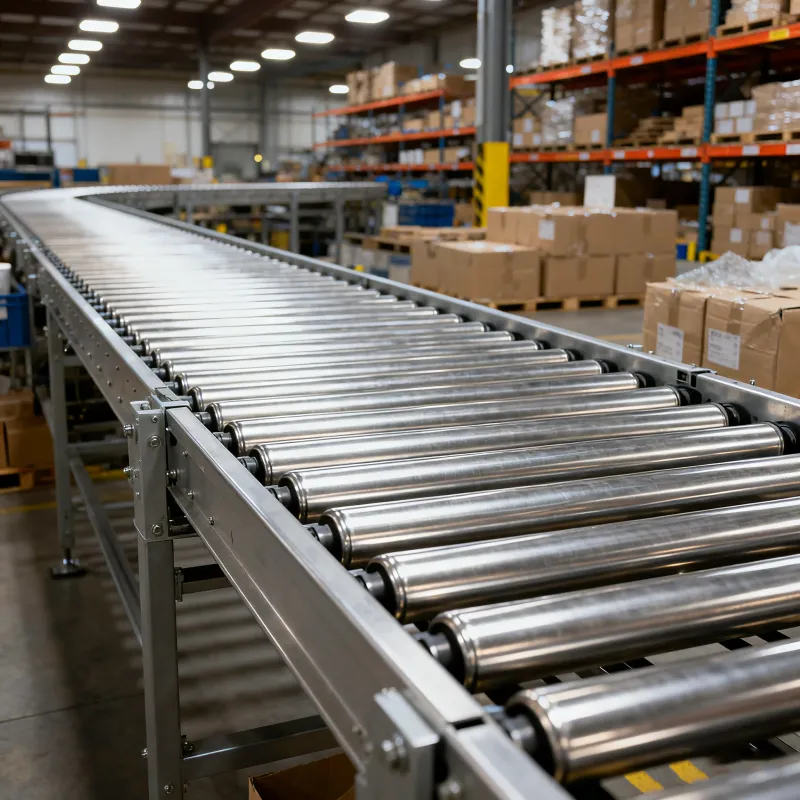
TianQi Machinery develops and manufactures several common conveying equipment types that can be selected according to process needs. Each configuration serves a specific transport condition and should be matched to the working environment rather than selected by name alone.
| Equipment Type | Common Use | Configuration Focus |
|---|---|---|
| Belt Conveyor | Suitable for steady transport of bulk materials over longer distances | Load capacity, belt selection, support structure, and operational stability |
| Chain Bucket Conveyor | Useful for handling materials that need enclosed or lifted conveying | Bucket structure, chain performance, and vertical transport efficiency |
| Spiral Conveyor | Often applied where compact layout and continuous lifting are required | Space utilization, lifting angle, and suitability for the material form |
| Vertical Elevator | Designed for vertical transfer between process levels | Lift height, feeding stability, discharge control, and safety protection |
Mining conveying systems usually face heavier loads, abrasive materials, and harsher operating environments. Durability, structural strength, and stable continuous operation are key considerations. Equipment selection should pay close attention to wear resistance and the ability to support demanding production cycles.
Chemical production often involves materials that may be corrosive, dusty, or sensitive to contamination. In these cases, equipment configuration should emphasize sealing, safe operation, and maintenance convenience. A well-matched conveying system helps support process reliability and reduce unnecessary handling risk.
Grain handling places strong emphasis on material protection, cleanliness, and stable flow. The conveying system should support efficient transport while helping reduce spillage, dust generation, and unnecessary downtime during routine maintenance or cleaning.
As a high-tech enterprise focused on conveying equipment R&D, production, and export, ZhengZhou TianQi Machinery Co., Ltd. combines engineering experience with practical application understanding. The company works with industrial buyers who need conveying systems that are reliable, efficient, and appropriate for real production conditions.
The design approach is guided by technology-led development and quality-based manufacturing. This means the equipment is considered from the perspective of process fit, operational stability, and long-term service needs rather than a single standard configuration for every scenario.
A suitable conveying system is one that matches the material, supports the process, and remains practical for daily operation and maintenance.
For mining, chemical, and grain operations, conveying equipment is a core part of production continuity. ZhengZhou TianQi Machinery Co., Ltd. provides conveying solutions designed to support these industrial scenarios with attention to material characteristics, durability, safety, and maintenance convenience. If your project requires a practical equipment configuration discussion, the right starting point is always the production requirement itself.

 502
|
502
|
 ZhengZhou TianQi Machinery Co., Ltd.
intelligent foreign trade marketing management platform
SaaS
lead generation efficiency
foreign trade companies
customer management
247
|
ZhengZhou TianQi Machinery
mining conveying equipment
chemical conveying equipment
grain conveying equipment
conveying solutions
162
|
ZhengZhou TianQi Machinery
intelligent foreign trade marketing management platform
CRM
customs data
marketing email
256
|
Tianqi Machinery
foreign trade marketing digitalization
integrated collaboration
marketing tools integration
platform value
426
|
ZhengZhou TianQi Machinery Co., Ltd.
industrial conveying project
conveying solution design
installation and commissioning
after-sales support
ZhengZhou TianQi Machinery Co., Ltd.
intelligent foreign trade marketing management platform
SaaS
lead generation efficiency
foreign trade companies
customer management
247
|
ZhengZhou TianQi Machinery
mining conveying equipment
chemical conveying equipment
grain conveying equipment
conveying solutions
162
|
ZhengZhou TianQi Machinery
intelligent foreign trade marketing management platform
CRM
customs data
marketing email
256
|
Tianqi Machinery
foreign trade marketing digitalization
integrated collaboration
marketing tools integration
platform value
426
|
ZhengZhou TianQi Machinery Co., Ltd.
industrial conveying project
conveying solution design
installation and commissioning
after-sales support