Conveyor Equipment Selection Guide for Mining, Chemical, and Grain Applications
ZhengZhou TianQi Machinery Co., Ltd.
2026-08-13
Industry Guide
ZhengZhou TianQi Machinery explains how to configure conveyor equipment for mining, chemical, and grain applications, comparing belt, bucket, screw, and vertical conveyors by material handling requirements.
Material Handling Guidance
Choosing the Right Conveyor Equipment for Mining, Chemical, and Grain Applications
Conveyor equipment selection should begin with the characteristics of the material and the operating environment—not with a single conveyor type. ZhengZhou TianQi Machinery Co., Ltd. provides conveyor equipment guidance for mining, chemical, and grain material handling systems, helping businesses evaluate belt conveyors, bucket conveyors, screw conveyors, and vertical conveyors according to practical handling requirements.
Key Factors in Conveyor System Configuration
A suitable conveyor system should match the material, conveying route, operating conditions, and production objectives. Before choosing equipment, it is useful to clarify the following points:
Material Properties
Consider particle size, bulk density, moisture, temperature, flowability, and whether the material is abrasive, dusty, or prone to sticking.
Route and Layout
The conveying distance, required elevation, horizontal or inclined route, available space, and transfer points influence the equipment configuration.
Operating Conditions
Dust control, moisture protection, wear resistance, corrosion resistance, cleaning access, and continuous operation should be assessed for the application.
Process Requirements
Required capacity, feeding method, discharge points, control requirements, and integration with upstream or downstream equipment help define the complete system.
Comparing Common Conveyor Equipment Types
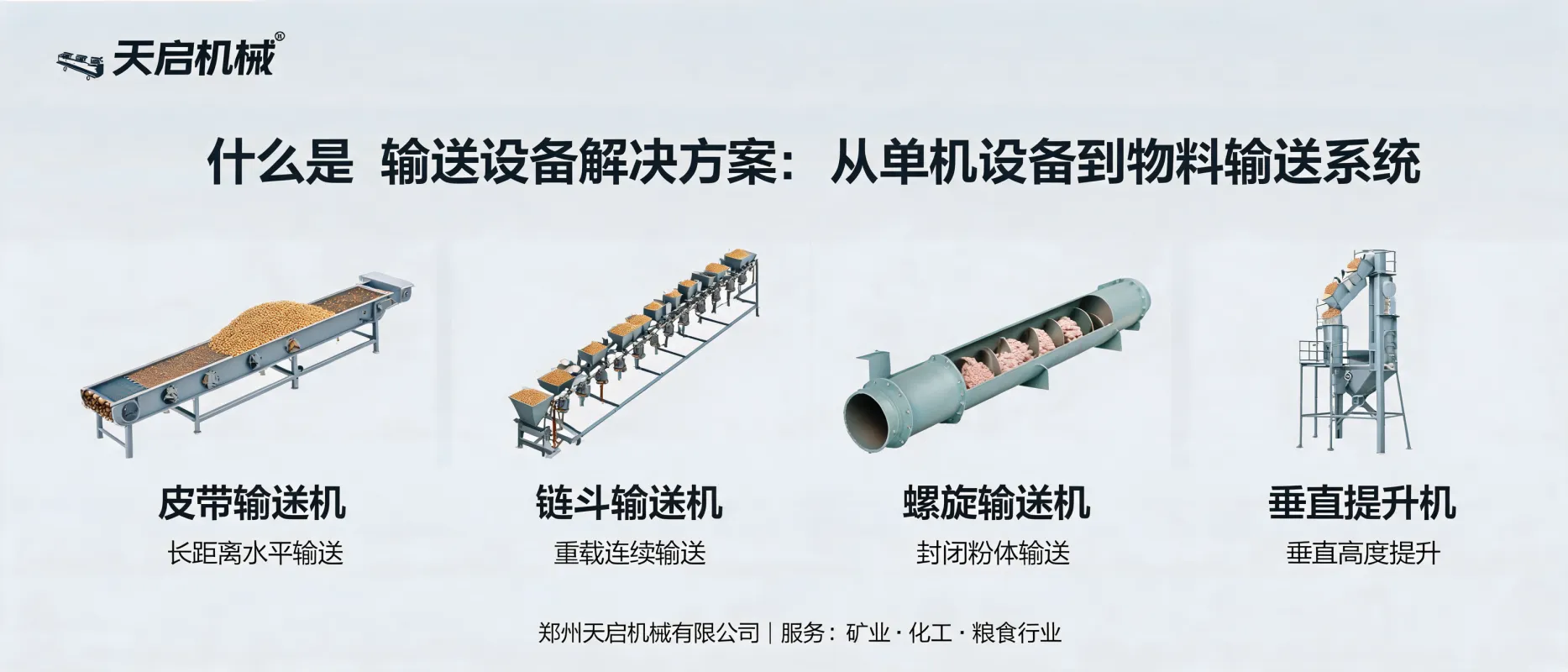
Each conveyor type has a different operating principle and is suited to particular material handling conditions. The comparison below provides an initial direction for equipment selection.
| Conveyor type |
Typical configuration role |
Important selection considerations |
| Belt conveyor |
Suitable for conveying materials along horizontal or inclined routes over a defined distance. |
Belt selection, material properties, incline, loading method, transfer points, dust control, and maintenance access. |
| Bucket conveyor |
Designed for lifting or conveying bulk materials vertically or through a combined elevation route. |
Material flowability, moisture, bucket loading and discharge, vertical height, sealing, and wear conditions. |
| Screw conveyor |
Used for controlled movement of bulk materials through a compact conveying route. |
Material flowability, moisture and temperature, corrosion or abrasion risk, conveying distance, and cleaning requirements. |
| Vertical conveyor |
Provides vertical lifting where floor space or process layout requires elevation between levels. |
Required lift height, feed stability, discharge position, material characteristics, safety, and connection with other conveyors. |
Application Considerations by Industry
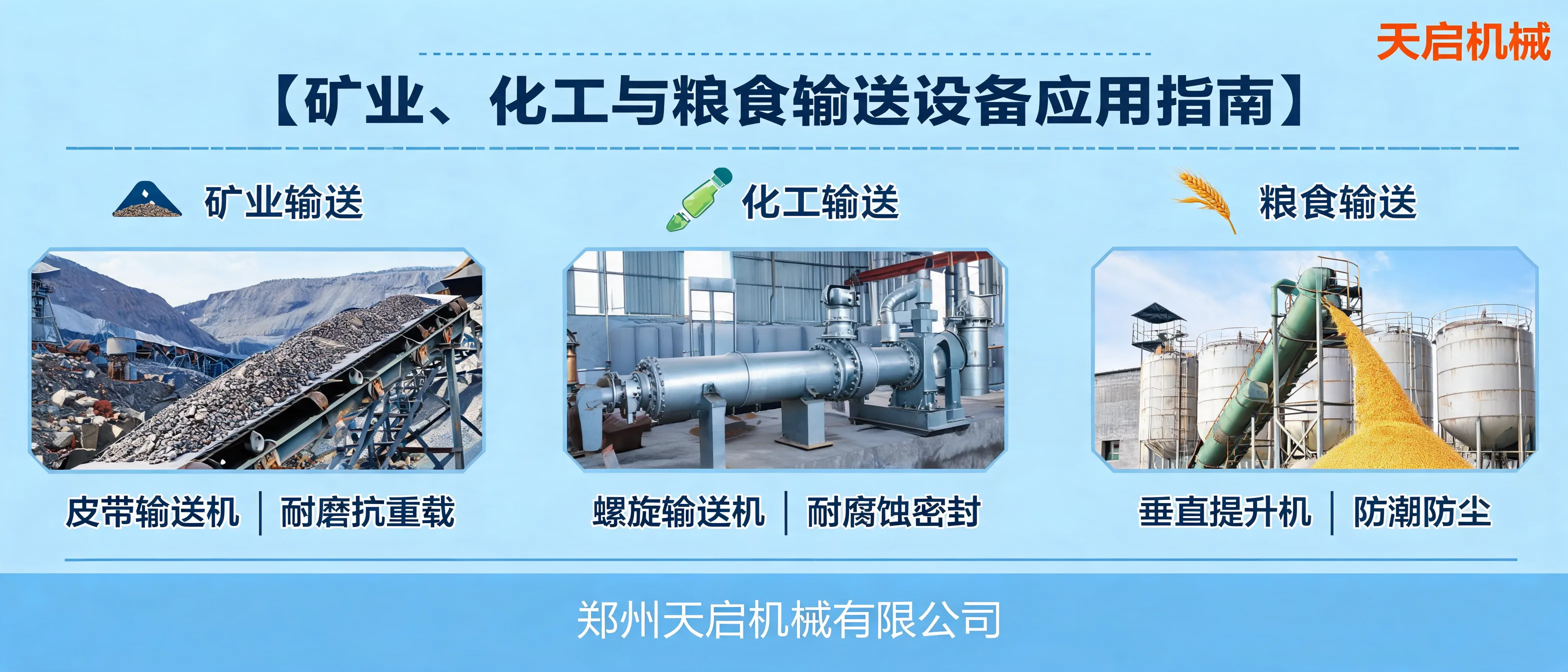
Mining Conveyor Equipment
Mining materials may involve abrasive particles, heavy loads, dust, and demanding continuous-operation conditions. Equipment configuration should therefore focus on conveying stability, wear resistance, structural suitability, transfer-point design, and convenient inspection and maintenance.
Chemical Conveyor Equipment
Chemical material handling requires careful attention to material compatibility, corrosion resistance, sealing, dust control, temperature, and safe operation. The selected conveyor should be evaluated against the specific properties of the material and the surrounding process environment.
Grain Conveyor Equipment
Grain handling commonly places emphasis on steady material flow, moisture protection, reduced contamination risk, gentle transfer, cleaning access, and reliable operation. The conveying route and transfer points should be planned to support the requirements of the complete grain handling process.
A Practical Selection Process
- Define the material: Identify the material type, particle characteristics, moisture, temperature, abrasiveness, corrosion risk, and flowability.
- Map the route: Confirm the conveying distance, elevation, inclination, available space, feeding points, and discharge locations.
- Set the operating requirements: Clarify capacity expectations, operating schedule, dust and moisture control, cleaning, inspection, and maintenance needs.
- Match the conveyor type: Compare belt, bucket, screw, and vertical conveyor options according to the material and process conditions rather than selecting by equipment name alone.
- Review the complete system: Check how the conveyor will connect with feeding, storage, processing, and discharge equipment to ensure that the configuration supports the full material handling process.
Why Work with ZhengZhou TianQi Machinery?
Founded in 2013 and headquartered in Henan, China, ZhengZhou TianQi Machinery Co., Ltd. focuses on the research, production, and export of conveying equipment. Its product range includes belt conveyors, bucket conveyors, screw conveyors, and vertical lifting equipment for applications such as mining, chemical processing, and grain handling.
With a professional research and development team and after-sales service capabilities, TianQi Machinery supports customers in evaluating conveyor equipment according to their material handling requirements. The company serves international markets including Europe, North America, Southeast Asia, and the Middle East, with a focus on technically informed configuration and reliable equipment solutions.
Selection reminder: The most suitable conveyor system depends on the material, conveying route, operating environment, and process objectives. Providing these details enables a more accurate comparison of equipment types and configuration options.


.png?x-oss-process=image/resize,h_100,m_lfit/format,webp)
.png?x-oss-process=image/resize,h_100,m_lfit/format,webp)
.png?x-oss-process=image/resize,h_100,m_lfit/format,webp)