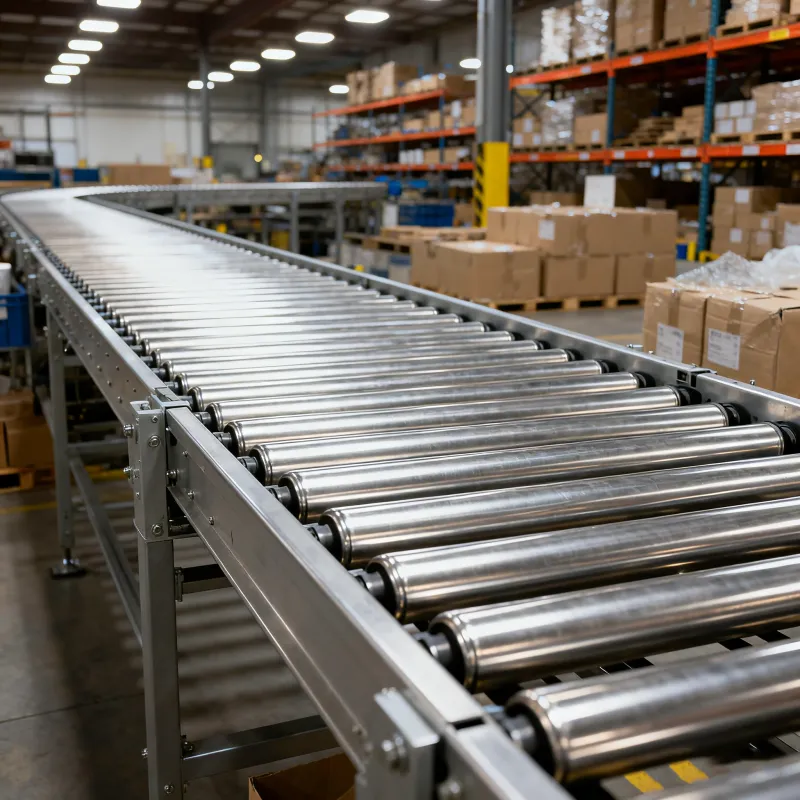
Stable operation is essential when a pneumatic conveying system handles bulk powders or granular materials. ZhengZhou TianQi Machinery provides enclosed pneumatic conveying systems designed for controlled material transfer in mining, chemical, food, building materials, and related industries. This guide outlines the main factors that production and maintenance teams should consider when operating a multifunctional pneumatic conveyor.
Operating note: Pressure settings, process coordination requirements, inspection intervals, and troubleshooting procedures should be confirmed according to the equipment configuration, conveyed material, pipeline layout, and actual site conditions.
A multifunctional pneumatic conveying system uses controlled airflow inside enclosed pipelines to move materials through horizontal, vertical, or inclined routes. Stable performance depends on the coordinated control of the pressure mode, conveying direction, material characteristics, and any integrated process functions.
Select an appropriate low-, medium-, or high-pressure mode based on the conveying application and system configuration.
The sealed pipeline design helps reduce exposure to external contamination and minimize material loss during transfer.
Heating, cooling, drying, and classification functions can be integrated when required by the material-handling process.
ZhengZhou TianQi Machinery pneumatic conveying systems can be configured for low-, medium-, or high-pressure operation. Depending on the application, the system may use positive pressure, negative pressure, or a combined pressure arrangement. The correct selection should be based on the material, conveying distance, pipeline direction, required process integration, and site conditions.
| Adjustment area | What to evaluate | Stability objective |
|---|---|---|
| Pressure level | Material behavior, conveying route, and equipment configuration | Maintain a consistent material flow without unnecessary system stress |
| Pressure type | Positive, negative, or mixed-pressure operating requirements | Match the airflow direction and material-handling process |
| Conveying direction | Horizontal, vertical, or inclined pipeline layout | Keep material transfer coordinated across the complete route |
Pressure adjustments should be made in a controlled manner. If the material flow, airflow, or system response changes unexpectedly, the operating team should review the selected mode and check the relevant equipment and pipeline conditions before continuing.
A multifunctional pneumatic conveyor may support additional process functions during conveying, including heating, cooling, drying, and material classification. These functions should be coordinated with the conveying sequence rather than operated independently.
Troubleshooting should begin with observable symptoms and proceed through the airflow, pressure mode, material feed, pipeline, and integrated process functions. The following guide provides a structured starting point for production and maintenance teams.
| Observed symptom | Points to inspect | Recommended response |
|---|---|---|
| Unstable or interrupted material flow | Pressure mode, airflow condition, material feed, and pipeline route | Review the operating configuration and verify that the selected pressure arrangement matches the application |
| Reduced conveying efficiency | Pipeline condition, material accumulation, and process coordination | Inspect the enclosed conveying route and check whether an integrated heating, cooling, drying, or classification stage affects flow |
| Unexpected system response | Pressure selection, airflow control, connections, and equipment status | Place the system in a safe condition and obtain technical assistance when the cause cannot be confirmed onsite |
Preventive maintenance helps teams identify developing issues before they affect conveying continuity. Inspection frequency should be determined according to equipment configuration, operating conditions, material properties, and the production environment.
The most suitable pneumatic conveying system depends on the material-handling task rather than on a single pressure setting. ZhengZhou TianQi Machinery supports professional customization for different bulk powder and granular material applications, including conveying routes that require horizontal, vertical, or inclined transfer and processes that require additional treatment or classification.
A stable solution should be evaluated through the complete operating chain: material characteristics, pressure mode, conveying direction, process coordination, inspection requirements, and technical support.
With a focus on technology-led development and quality-based manufacturing, ZhengZhou TianQi Machinery provides customized pneumatic conveying solutions and responsive after-sales support. The company states a 98% on-time delivery rate and technical response within 2 hours. For a project-specific configuration, operating parameters and maintenance requirements should be confirmed with the TianQi technical team according to the material, process route, and site conditions.
 38
|
 ZhengZhou TianQi Machinery conveyor equipment solutions belt conveyor bucket conveyor roller conveyor system
62
|
ZhengZhou TianQi Machinery Co., Ltd. industrial conveyor equipment conveyor equipment solutions screw conveyor vertical conveyor
156
|
ZhengZhou TianQi Machinery Co., Ltd. conveyor equipment solutions belt conveyors material handling equipment conveyor equipment export
113
|
ZhengZhou TianQi Machinery Co., Ltd. industrial conveying equipment conveying equipment solutions roller conveyor system vertical conveyor
369
|
ZhengZhou TianQi Machinery horizontal roller conveyor selection roller conveyor parameter comparison powered and non-powered conveyors modular conveyor system integration