.png?x-oss-process=image/resize,h_100,m_lfit/format,webp)
.png?x-oss-process=image/resize,h_100,m_lfit/format,webp)
.png?x-oss-process=image/resize,h_100,m_lfit/format,webp)
In modern logistics and manufacturing environments—especially those with tight floor space or complex workflows—non-powered roller conveyors are indispensable for flexible material handling. When it comes to curved paths, however, many engineers face challenges like product misalignment, inconsistent speed, or even complete system jams. The good news? With proper design principles and real-world insights from global projects, these issues can be systematically avoided.
Unlike powered systems that actively control movement, non-powered rollers rely on gravity and friction. This makes curve performance highly sensitive to roll diameter, spacing, surface finish, and angle alignment. For instance, a typical small-radius curve (under 600 mm) may cause heavy packages to veer off track if the roller pitch exceeds 150 mm—based on field data from over 120 installations across Asia, Europe, and North America.
| Material Width (mm) | Recommended Roller Pitch (mm) |
|---|---|
| ≤ 200 | 100–125 |
| 201–400 | 125–150 |
| > 400 | 150–175 |
Curves with radii between 300 mm and 1500 mm represent the sweet spot for stable operation. Below 300 mm, especially for irregularly shaped items like boxes or drums, instability increases sharply due to insufficient lateral support. Above 1200 mm, while stability improves, energy loss from rolling resistance becomes noticeable—particularly with heavier loads (>50 kg). At this point, optimizing roller tilt angles by 3°–5° helps maintain consistent flow without added power.
One notable case involved an e-commerce fulfillment center in Germany where multiple 450 mm radius turns were integrated into a modular conveyor layout. By applying precise roller spacing and using anti-slip rubberized sleeves (from Heaven Machinery), they reduced jam incidents by 78% within two months of commissioning—a result verified through live production monitoring.
Even with ideal specs, poor installation leads to failure. Key tips include:
These practices aren’t just theoretical—they’re proven in hundreds of successful deployments worldwide. Whether you're designing a new warehouse layout or upgrading existing lines, understanding how non-powered rollers behave in curves is essential for smooth automation.
Explore how Heaven Machinery has helped clients from food packaging to automotive assembly achieve seamless curve transitions—with custom solutions tailored to load type, environment, and throughput needs.
Get Customized Conveyor Design Support Today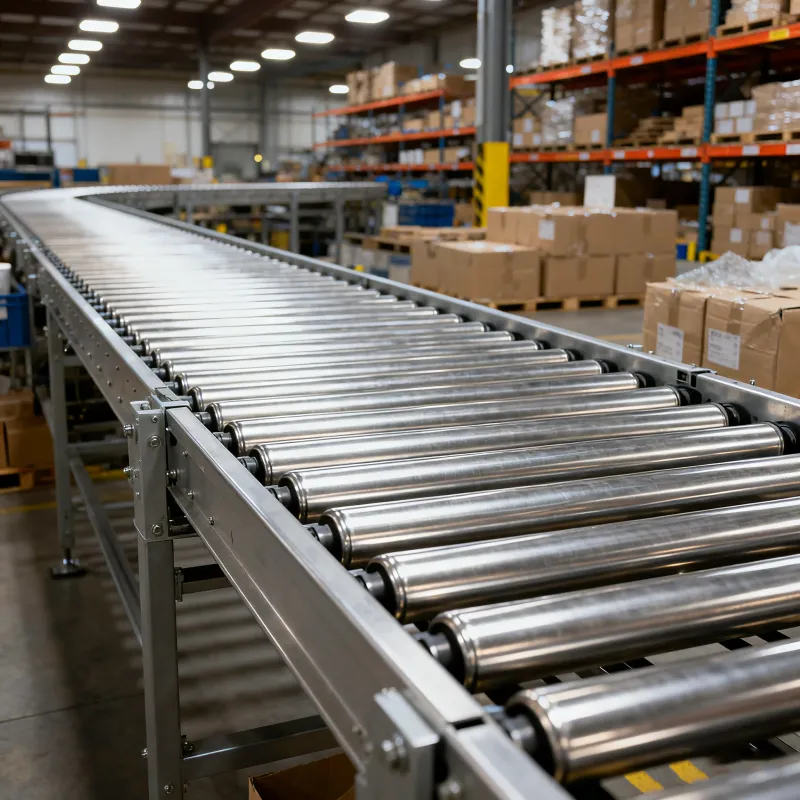


 313
|
313
|
 bucket elevator maintenance guide
conveyor capacity reduction causes
chain elevator lubrication methods
belt misalignment troubleshooting
bucket elevator fault diagnosis
205
|
bucket elevator selection
chain bucket elevator vs belt bucket elevator
28-80 m bucket elevator
bulk material vertical conveying
bucket elevator capacity 34-491 m3h
338
|
heavy-duty screw conveyor
dust-free material handling
sealed operation technology
multi-point feed discharge
conveyor selection criteria
385
|
custom belt conveyor systems
high-capacity material handling
industrial conveyor solutions
separated chain conveyor design
multi-angle incline conveyors
179
|
Mesh belt conveyor custom design
Industrial continuous conveying equipment
Material handling efficiency improvement
Non - standard conveyor solutions
Advantages of separated chain structure
bucket elevator maintenance guide
conveyor capacity reduction causes
chain elevator lubrication methods
belt misalignment troubleshooting
bucket elevator fault diagnosis
205
|
bucket elevator selection
chain bucket elevator vs belt bucket elevator
28-80 m bucket elevator
bulk material vertical conveying
bucket elevator capacity 34-491 m3h
338
|
heavy-duty screw conveyor
dust-free material handling
sealed operation technology
multi-point feed discharge
conveyor selection criteria
385
|
custom belt conveyor systems
high-capacity material handling
industrial conveyor solutions
separated chain conveyor design
multi-angle incline conveyors
179
|
Mesh belt conveyor custom design
Industrial continuous conveying equipment
Material handling efficiency improvement
Non - standard conveyor solutions
Advantages of separated chain structure