.png?x-oss-process=image/resize,h_100,m_lfit/format,webp)
.png?x-oss-process=image/resize,h_100,m_lfit/format,webp)
.png?x-oss-process=image/resize,h_100,m_lfit/format,webp)

Industrial Conveying Equipment Solutions
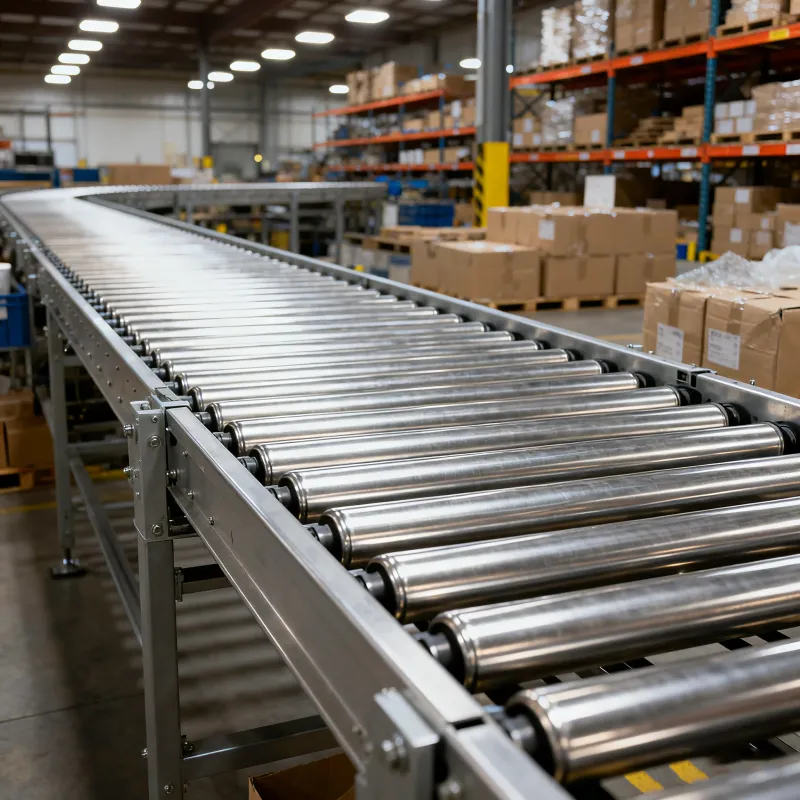
An industrial conveying equipment solution is more than a single conveyor. It connects equipment selection with material characteristics, production capacity, plant layout, operating conditions, system stability, and ongoing service requirements.
For a production line to operate consistently, the conveying system must match both the material and the process. ZhengZhou TianQi Machinery Co., Ltd. evaluates the working conditions behind the conveying task rather than selecting equipment by product name alone.
Depending on the application, an industrial conveying equipment solution may involve belt conveyors, bucket conveyors, screw conveyors, vertical elevators, and mesh belt conveyors. The appropriate configuration is determined by the material properties, conveying route, required capacity, installation environment, and coordination requirements of the complete system.
Material temperature, size, weight, surface characteristics, and handling conditions influence the conveyor structure and material selection.
The required throughput helps define the conveying arrangement and supports coordination with upstream and downstream equipment.
Horizontal, inclined, and vertical routes require different structural considerations, particularly where space is limited or the process includes height changes.
Maintenance access, component durability, response time, delivery coordination, and system integration are part of the overall solution.

TianQi Machinery’s mesh belt conveyor is designed for demanding material conveying tasks where route flexibility, temperature tolerance, capacity, and maintainability must be considered together. It can support horizontal, inclined, and vertical conveying in complex space layouts.
The equipment is available in carbon steel, 201 stainless steel, and 304 stainless steel configurations. This provides a basis for adapting the conveyor structure to different operating environments and application requirements.
| Consideration | Mesh Belt Conveyor Information |
|---|---|
| Conveying capacity | Up to 526 m³/h, subject to the specific configuration and operating conditions. |
| Material temperature | Suitable for conveying materials with temperatures up to 600°C. |
| Conveying direction | Horizontal, inclined, and vertical conveying for complex layout conditions. |
| Structural design | Separate traction and load-bearing chains simplify the structure and support easier maintenance. |
| Friction reduction | Rolling bearings on the rollers can reduce friction by approximately 55%–65%, helping lower energy consumption. |
| Wear resistance | Wear-resistant alloy steel components support long-term service use. |
The mesh belt conveyor can be considered for material handling processes that require high capacity, elevated-temperature conveying, or adaptation to a non-linear plant layout. Typical application directions include:
Precise conveying, driving the future. With a focus on technology and quality, ZhengZhou TianQi Machinery Co., Ltd. helps businesses evaluate conveying equipment as part of a coordinated material conveying system—not as an isolated machine.
 166
|
166
|
 ZhengZhou TianQi Machinery conveyor equipment selection belt conveyor chain bucket conveyor screw conveyor
206
|
ZhengZhou TianQi Machinery Co., Ltd. foreign trade lead generation smart marketing management platform lead conversion customer follow-up
160
|
TianQi Machinery foreign trade digital marketing tool integration data collaboration marketing conversion
144
|
ZhengZhou TianQi Machinery Co., Ltd. customs data email marketing CRM workflow foreign trade lead generation
452
|
ZhengZhou TianQi Machinery conveyor equipment purchasing mistakes lifecycle cost of conveyor systems conveyor system stability supplier evaluation
ZhengZhou TianQi Machinery conveyor equipment selection belt conveyor chain bucket conveyor screw conveyor
206
|
ZhengZhou TianQi Machinery Co., Ltd. foreign trade lead generation smart marketing management platform lead conversion customer follow-up
160
|
TianQi Machinery foreign trade digital marketing tool integration data collaboration marketing conversion
144
|
ZhengZhou TianQi Machinery Co., Ltd. customs data email marketing CRM workflow foreign trade lead generation
452
|
ZhengZhou TianQi Machinery conveyor equipment purchasing mistakes lifecycle cost of conveyor systems conveyor system stability supplier evaluation